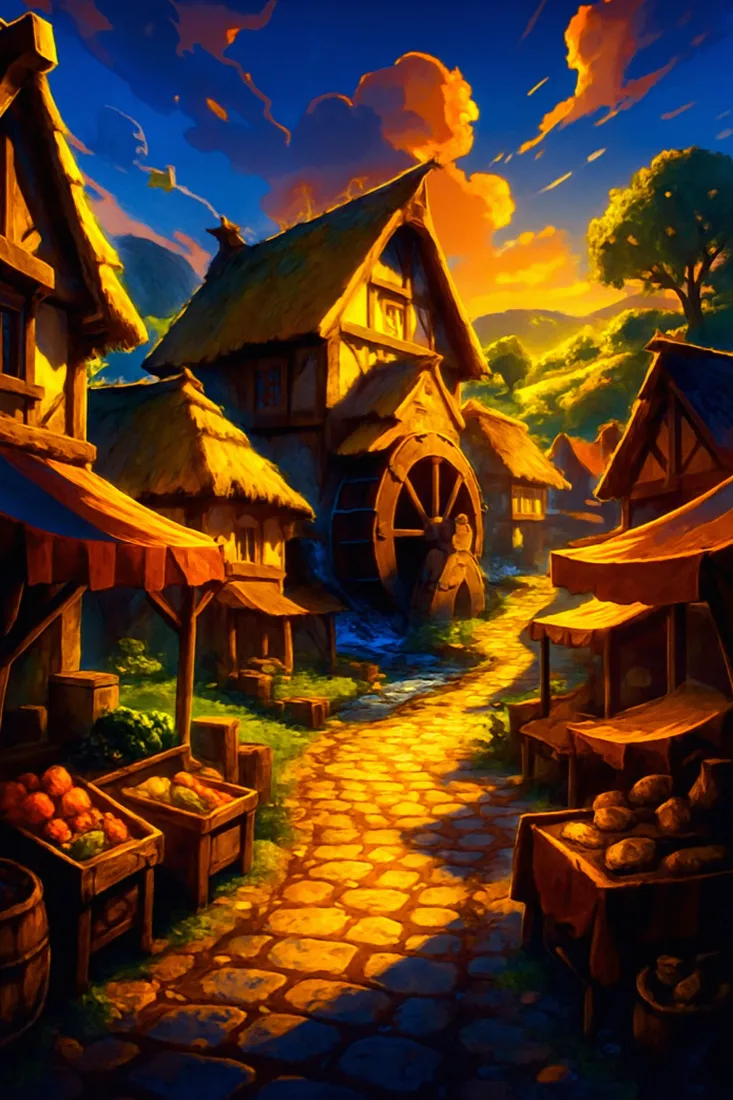
The name suggests a simple farm game, and the first hour supports that idea: plant wheat, tend animals, harvest. Then the mill appears, and the bakery, and you realise the game is really about chains. Wheat becomes flour, flour becomes bread, milk goes to the dairy, grapes go to the winery. The village grows because those chains grow, and not because anyone marched anywhere.
It is set in medieval times, which gives the village a warm, timber-and-thatch character. Our diary covered weeks of short visits and the occasional longer weekend session. It was the game we were most likely to open first thing in the morning, because there was always something ready to collect and something sensible to start.
From wheat field to bakery shelf
The production chains are the heart of the game, and they are pleasingly concrete. You plant wheat, grind it into flour at the mill and bake bread from it. Chickens give eggs, cows give milk for the dairy, and grapes become wine in the winery. A carpenter rounds out the early workshops. Because each step is visible, you always understand why you are short of something.
That clarity makes planning satisfying. A good morning visit is a little logistics puzzle: which fields to replant, which workshop to load, what will be finished by the evening. None of it is hard, but it is absorbing, and the reward of a full storehouse is tangible in a way that abstract resource counters rarely are.
Animals with personality
The livestock deserves its own mention. Alongside the expected farm animals, the game features heritage breeds such as the Mangalitsa pig and the white silkie chicken, and the developers clearly enjoyed animating them. Animals flap their wings and roll around in their enclosures, which sounds trivial until you notice how much it brightens a quick check-in.
This is part of a broader warmth. My Little Farmies is not trying to impress with scale. It wants your village to feel lived in, and small touches like these do much of the work. It is the kind of game you leave open in a corner of the screen just because it looks cheerful.
Customers decide what your village is for
Production would feel aimless without someone to buy it, and here the game adds a nice layer of choice. Customers visit the village wanting goods, and you decide whom to sell which products to, from wholesalers to travelling salesmen. It turns the economy into a series of small decisions about what to prioritise and when.
We found this the most strategic part of the game. Do you hold your wine for a better buyer, or clear the storehouse now to keep production flowing? There is no wrong answer, but there are better and worse ones for your plans, and working them out gives the gentle routine a backbone.
Levels, regions and a bit of company
Progress is tied to your level, and the game is open about it: the higher you climb, the more options become available. Special regions unlock as you advance, adding new places to develop. There are guilds for players who want company, and tower construction competitions for those who enjoy a friendly contest.
The pace is slower than the InnoGames titles, which suits the theme. Some evenings you simply collect, restock and leave. As a free player we never hit a wall; the optional premium currency speeds things up, but the village grows happily without it. The one caveat is that it runs in a desktop browser only, so it is not a phone-on-the-bus game.
My Little Farmies: laying the first stones
- Keep fields planted at all times; idle land is the single biggest early slowdown.
- Build the mill and bakery early so wheat turns into bread rather than piling up.
- Line up longer workshop jobs before bed and shorter ones during the day.
- Watch which customers want which goods and save your best products for the best buyers.
- Check the level unlocks so you know which workshop or region is coming next.
What we love
- Completely free of combat, with a calm and friendly village atmosphere
- Production chains are concrete and easy to follow from field to shelf
- Charming animal animations make short visits a small pleasure
- Choosing which customer gets your goods adds genuine decisions
What grates
- Desktop browser only, so no quick checks from a phone
- Progress through levels can feel slow during the middle stretch
- Little to excite players who want grand cities and long histories
The planner My Little Farmies rewards
Anyone who loves the producing side of builders and could happily do without the fighting. It suits people who enjoy short, regular visits and the satisfaction of a well-stocked storehouse, and it is a fine choice for a relaxed evening after a hectic day.
My Little Farmies: the finished plan
My Little Farmies is the gentlest builder on Oakhollowarcade and the one with the best daily rhythm. It lacks the scale of the civilisation games above it, but its production chains, cheerful animals and customer choices make a village that feels alive. If peace and order appeal more than empire, start here instead of at the top of the shelf.